
Have you noticed blurred vision, dark spots, or sudden flashes of light affecting your sight? At New York Retina Center, Dr. Brandon Johnson offers laser retinal photocoagulation in NYC to stop bleeding, seal weak vessels, and protect your vision, helping you see clearly again and prevent serious vision loss with compassionate, expert care.
Restore Retinal Health Using Light Therapy
Retinal laser treatments are minimally invasive procedures that use focused light energy to repair or prevent damage to the retina, the delicate tissue responsible for sharp, central vision. These treatments seal leaking blood vessels, reduce swelling, and stop abnormal vessel growth that can threaten sight. Commonly used for conditions like diabetic retinopathy, retinal tears, or retinal vein occlusion, laser therapy helps preserve existing vision and prevent vision loss.
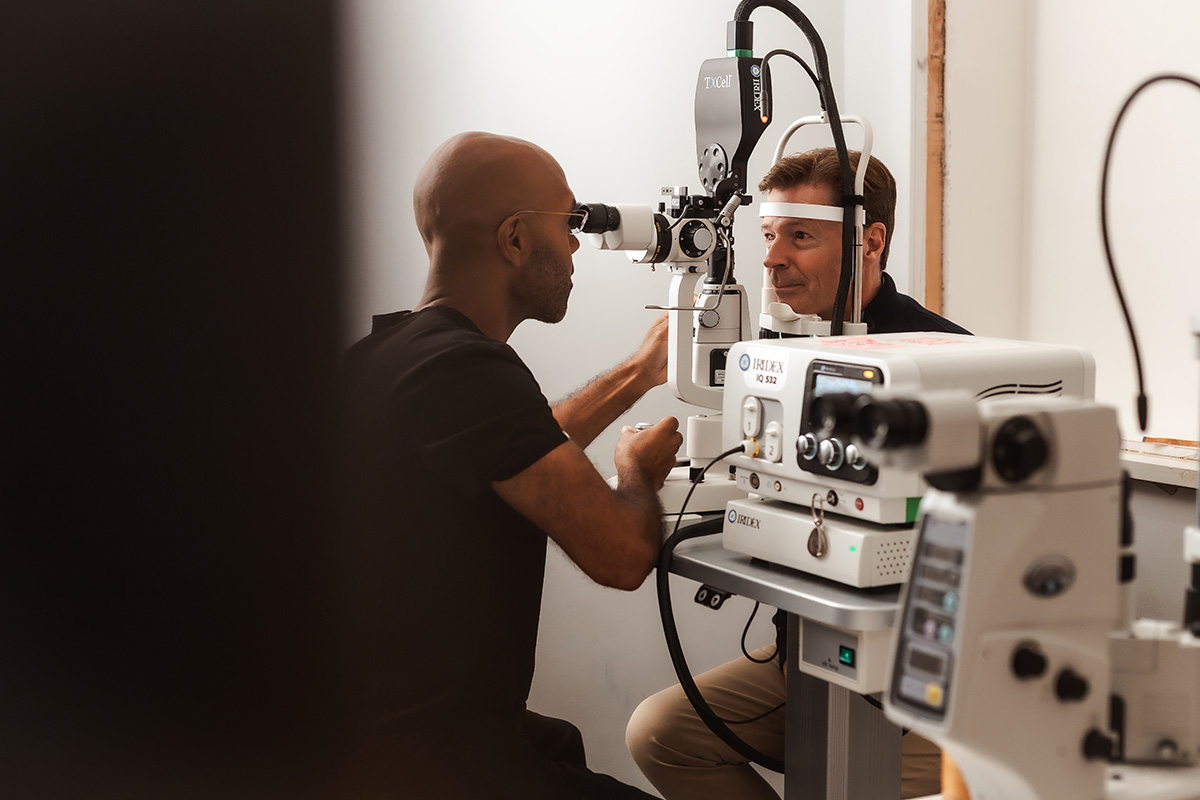
Retinal Laser Treatments Can Treat These Symptoms:
- Blurred or distorted vision caused by retinal swelling
- Dark or empty spots in your central or peripheral vision
- Sudden flashes of light or new floaters in your visual field
- Gradual vision loss from leaking or abnormal blood vessels
- Difficulty focusing or reading due to macular changes
- Visual disturbances linked to diabetic or vascular eye disease
When Are Retinal Laser Treatments Indicated?
Laser retinal photocoagulation in NYC is most effective when performed early. The retina is a thin, light-sensitive layer at the back of your eye responsible for capturing images. When this delicate tissue becomes damaged or develops abnormal blood vessels, it can threaten your vision. Laser therapy helps seal, shrink, or repair these areas.
Retinal laser treatments are commonly indicated for conditions such as:
- Diabetic retinopathy and diabetic macular edema
- Retinal vein occlusion with fluid leakage or bleeding
- Retinal tears or small detachments
- Macular edema from vascular disorders
Types of Retinal Laser Treatments Performed
Focal Laser Photocoagulation
Focal laser photocoagulation targets small, specific areas of the retina where fluid or blood is leaking from damaged vessels, often due to diabetic macular edema or retinal vein occlusion. When performing laser retinal photocoagulation in NYC, Dr. Johnson uses the Iridex Argon laser to direct tiny bursts of light energy onto these leaking spots. The heat from the laser seals the blood vessels and reduces swelling, preventing further fluid buildup. By stabilizing the macula, the area responsible for sharp central vision, this procedure helps preserve visual clarity and prevent progressive vision loss.
Pan-Retinal Photocoagulation
Pan-retinal photocoagulation (PRP) is used when abnormal blood vessels begin growing on the retina, a condition known as proliferative diabetic retinopathy. These vessels form due to a lack of oxygen in the retina and can bleed, leading to scar tissue. Dr. Johnson applies hundreds of small laser spots across the peripheral retina to reduce oxygen demand, slowing or stopping abnormal vessel growth. Though it may slightly narrow peripheral or night vision, PRP is highly effective in preventing severe bleeding and retinal detachment.
Benefits of Retinal Laser Treatments:
- Performed safely and comfortably in the office with minimal downtime
- Prevents further vision loss by sealing leaking or damaged vessels
- Reduces retinal swelling and preserves sharp central vision
- Stabilizes or improves sight in diabetic and vascular eye diseases
- Decreases the risk of retinal detachment or severe bleeding
- Provides long-term control of chronic retinal conditions
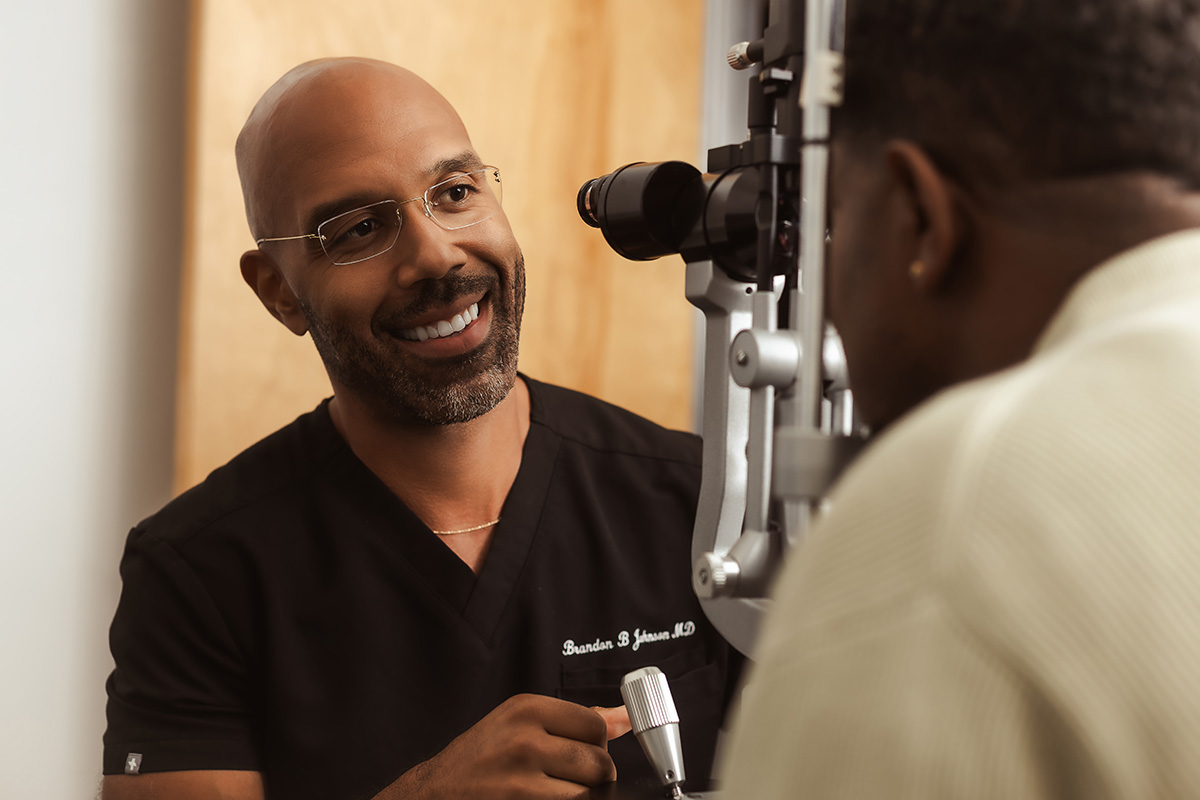
What Happens During Retinal Laser Treatments?
During your NYC laser retinal photocoagulation treatment, you’ll sit comfortably as your pupil is dilated and a numbing drop is applied to prevent discomfort. Dr. Johnson places a special lens on your eye to focus the laser on the affected area of your retina. Controlled pulses of light energy are delivered to seal leaking vessels, reduce swelling, or prevent abnormal growth. The procedure is completed within minutes, and you can return home the same day with minimal downtime.
What is the Recovery Process After Retinal Laser Treatments?
After your retinal laser treatment, you may experience mild eye discomfort, light sensitivity, or blurred vision for a few hours as your eye adjusts. These side effects are temporary and usually resolve within a day or two. Most patients resume normal activities quickly, though Dr. Johnson may recommend avoiding strenuous activity for a short period. Your vision may take time to stabilize as the retina heals, and follow-up visits are essential to monitor your progress.
Laser Retinal Photocoagulation FAQs
Will Laser Retinal Photocoagulation Restore The Vision I’ve Already Lost?
Usually not. The main goal of laser retinal photocoagulation is to seal leaking or abnormal vessels, reduce swelling, and prevent further vision loss, rather than to bring back vision that’s already been lost. In some cases, vision stabilizes or improves a bit as swelling resolves, and Dr. Johnson will give you realistic expectations for your eye.
How Many Laser Retinal Photocoagulation Sessions Will I Need?
It depends on your condition and how your retina responds. Focal laser treatment may be done once and repeated if needed, while pan-retinal photocoagulation often involves multiple sessions to cover the peripheral retina. Dr. Johnson will outline a plan at your consultation and adjust it at follow-up visits.
Is Laser Retinal Photocoagulation Painful?
Your pupil is dilated and your eye is numbed with drops, so most patients feel little to no pain. Some people notice bright flashes, pressure, or mild aching, which is more common with pan-retinal treatment because more laser spots are applied, and Dr. Johnson can help keep you comfortable.
Will Laser Retinal Photocoagulation Affect My Night Vision Or Side Vision?
Pan-retinal photocoagulation can slightly reduce peripheral or night vision because it treats the outer retina, while focal laser treatment is aimed at small areas near the center and is less likely to do so. Dr. Johnson will talk with you about what to expect, including whether you should take extra care with night driving.
Do I Still Need Regular Eye Exams After Laser Retinal Photocoagulation?
Yes, laser treatment helps control the condition, but the underlying disease can continue to change over time. Regular follow-up exams let Dr. Johnson check that the treated areas are stable and catch any new problems early.

Schedule Your Consultation
New York Retina Center is a leading destination for advanced retinal care under the expert guidance of Dr. Brandon Johnson, our board-certified ophthalmologist and fellowship-trained retina specialist. With 15+ years of experience and training from top institutions like Wills Eye Institute and Emory University, Dr. Johnson provides compassionate, precise laser treatments in Manhattan tailored to your needs. If you’re experiencing vision changes, schedule your consultation to learn how laser retinal photocoagulation in NYC can help protect your sight.

